Sydenham, Sepham, Cypenham or Sippenham as it has been known was a heavily wooded area of fine oaks, yew trees and quiet country lanes. There were some cottages on the lane from Northwood (now Norwood) to Southend (now Downham). In 1801 work was started on the Deptford to Croydon canal. This passed through Sydenham and 'The Greyhound' Inn was built where the road passed over the canal. The canal did not prosper long and it was taken over, filled in and converted into a railway.
This would increase traffic on the trains, they could charge for a wide range of entertainments and even benefit from development of a suddenly fashionable area around Lawrie Park and Newlands Park. The houses got progressively smaller towards Lower Sydenham and Bell Green, site of one of London's major gas works. The population grew from 2,800 in 1841 to 4,500 (1851), 10,595 (1861), 20,000 (1871) and around 40,000 by 1900. In 1872 Sydenham was imortalised in the works of the exiled Camille Pissaro - the most famous of which, a view along Lawrie Park Avenue towards St Bart's Church, now hangs in the National Gallery. Other famous residents of Sydenham have included Ernest Shackleton, the Antartic explorer, Sir George Groves, compiler of the musical dictionary, and W G Grace, England's greatest cricketer? More on these and other historical events when we find someone to
write them!
Produced by BrainStorm as part of our commitment to the community |

 Sydenham Now
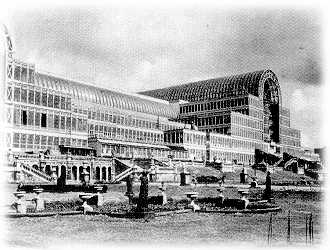 All changed in 1852 when the Directors
of the Railway company had the bright idea of buying and moving the Crystal
Palace built by St Joseph Paxton for the Great Exhibition in 1851 from Hyde
Park to Sydenham. Their idea was to encourage Londoners to take a day out 'in
the country' to visit the new enlarged Crystal Palace set in its own pleasure
gardens complete with pools, fountains and even a Dinosaur Theme Park. A sort
of combination of Disneyland and Jurassic Park!
All changed in 1852 when the Directors
of the Railway company had the bright idea of buying and moving the Crystal
Palace built by St Joseph Paxton for the Great Exhibition in 1851 from Hyde
Park to Sydenham. Their idea was to encourage Londoners to take a day out 'in
the country' to visit the new enlarged Crystal Palace set in its own pleasure
gardens complete with pools, fountains and even a Dinosaur Theme Park. A sort
of combination of Disneyland and Jurassic Park!